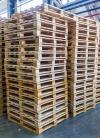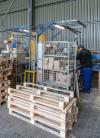
Pallet management was once largely limited to purchasing and replacing pallets when required. Today, businesses are increasingly focused on reducing waste, improving efficiency and supporting circular economy goals. Discover how wooden pallet management has evolved from a linear model to a circular approach based on pallet recovery, repair and reuse.
How pallet management has changed over time
For decades, wooden pallets were often treated as disposable transport packaging. Companies purchased pallets and used them to move and protect goods through the supply chain without considering what happened once the pallets left their facilities. This "send and forget" method resulted in significant pallet losses and ongoing replacement purchases, while also creating disposal costs for end users.
Today, supply chains are evolving from linear transactional operations to circular partnerships, where pallets are recovered from end-user locations and returned for reuse by producers. Rising material costs, sustainability targets and new regulations such as the Packaging and Packaging Waste Regulation (PPWR) are encouraging businesses to maximise pallet reuse, reduce waste and extend pallet lifecycles. Instead of focusing solely on purchasing pallets, many organisations are adopting circular pallet management strategies that keep pallets in use for as long as possible.
Comparing the pallet lifecycle: Then vs now
While the primary function of pallets has remained largely unchanged, the way businesses manage each stage of their lifecycle has evolved significantly.
| Lifecycle stage | Then | Now |
|---|---|---|
| 1. Production | Continuous demand for new pallets | Extend pallet lifespan through reuse |
| 2. Purchasing | Buy low-cost pallets and reorder when stocks run low | Purchase pallets with a focus on maximum reuse and total cost efficiency |
| 3. Transport | Pallets disappear into the supply chain | Improved visibility and control of pallet movements |
| 4. Recovery | Pallets are often lost after delivery | Establish return systems with end users to recover pallets for reuse |
| 5. Maintenance | Replace damaged pallets | Repair and maintain pallets |
| 6. End of life | Disposal | Recycling and material recovery |
The six stages of the wooden pallet lifecycle
Every wooden pallet goes through the same basic lifecycle, from production and use to recovery, repair and eventual recycling. What has changed is how businesses manage each stage. The shift from a linear model to a circular approach helps companies reduce pallet losses, extend pallet lifespan and make better use of resources throughout the supply chain.
Stage 1: Production and sourcing
In the past, demand for new wooden pallets was largely driven by pallet losses and damage. When pallets disappeared from the supply chain or became unusable, product producers simply purchased new ones, creating a continuous need for timber and pallet manufacturing.
Today, companies focus on the total cost of ownership of pallets across the supply chain. Through reuse, repair and recovery programmes, pallets can remain in circulation for longer, reducing costs and the need for new pallet production while supporting more sustainable supply chains. Production facilities are also becoming increasingly familiar with reused pallets.
Stage 2: Purchasing and inventory management
Pallet purchasing was traditionally reactive, cost and demand driven. Producers ordered additional pallets when stock levels became too low, often without having a clear picture of their pallet inventory across different locations. The purchase price was often the primary criterion when selecting a pallet supplier.
Today, pallets are increasingly managed as reusable assets belonging to the sender, rather than disposable transport packaging. Better inventory management, demand forecasting and pallet rental solutions help businesses optimise stock levels and reduce unnecessary pallet purchases. In fact, empty pallets at end-customer locations have become a valuable source of pallets for producers.
Stage 3: Transportation and distribution
During transportation, pallets move between manufacturers, warehouses, distribution centres and customers. At these stages, visibility of pallet movements can easily be lost. In the past, many businesses had limited insight into where pallets were located once shipments left their facilities.
Today, pallet tracking and reporting tools help companies monitor pallet flows across the supply chain. Better visibility supports pallet pool management, reduces losses and creates the conditions for pallet recovery programmes. This broader understanding of pallet movements has also increased the focus on the total cost of ownership of pallets across the supply chain.
Stage 4: Recovery
Recovery is the engine of a circular pallet system. Historically, many pallets remained at end-user sites or within distribution networks after the goods had been unloaded. The producer who initially puts the pallet into the supply chain often has no contact with the end user who, in turn, has no idea who the pallet belongs to. Without visibility across the supply chain and a structured collection process, businesses often had no practical way to return these pallets to service for reuse.
Today, pallet recovery programmes help businesses identify, collect and recover pallets from across the supply chain, improving pallet availability and reducing replacement demand. By recovering pallets instead of replacing them, organisations can lower procurement costs and increase the overall efficiency of their pallet fleet. In addition, pallet recovery reduces disposal costs for end users and improves the sustainability of the entire supply chain.
Stage 5: Maintenance and repair
In a linear pallet system, damaged pallets were often removed from service and replaced, even when the damage was relatively minor.
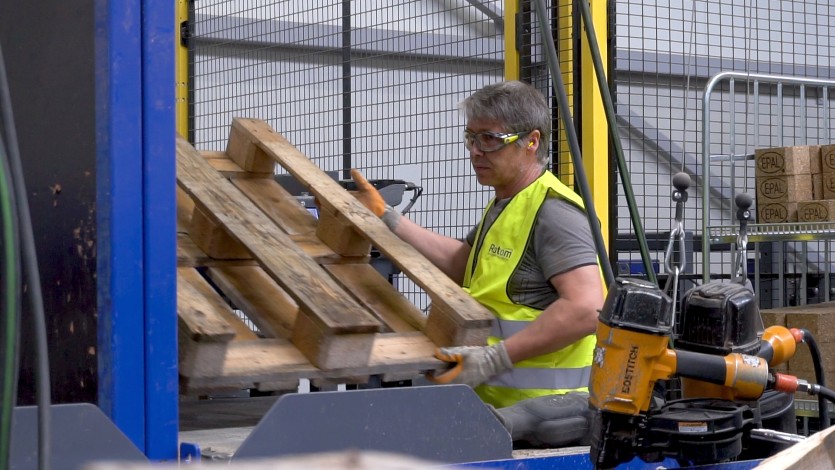
Today, pallet repair and maintenance play an important role in extending pallet lifespan. By carrying out inspections and replacing only damaged components, businesses can increase pallet utilisation, reduce waste and lower replacement costs.
Stage 6: End of life
Eventually, every wooden pallet or pallet part reaches the end of its usable life. In the past, this often meant disposal, with valuable raw materials leaving the supply chain and being used for energy recovery.
Today, businesses aim to recover as many valuable materials as possible. When pallets can no longer be repaired, wood and other materials will be recycled, repurposed or used for material recovery. This helps reduce waste, CO2 emissions and supports wider circular economy objectives.
Circular pallet management: Turning pallets into long-term assets
The way businesses manage the wooden pallet lifecycle has evolved from a simple "send and forget" model into a circular approach focused on recovery, repair, reuse and recycling. While the six lifecycle stages remain the same, supply chain partners now place greater emphasis on keeping pallets in circulation for as long as possible.
By treating pallets as reusable load carriers rather than disposable transport packaging, companies can improve supply chain efficiency, reduce pallet losses and make better use of existing resources. As sustainability targets, rising material costs and regulations such as the PPWR continue to drive greater resource efficiency and reuse, circular pallet management is becoming an essential part of modern supply chains.
Frequently asked questions about wooden pallet lifecycle management
Below are answers to some of the most common questions about wooden pallet lifecycle management, pallet recovery and circular pallet management.
What is the lifecycle of a wooden pallet?
The lifecycle of a wooden pallet typically includes production, purchasing, transportation, recovery, maintenance and end-of-life management. In a circular pallet management system, pallets can be recovered, repaired and reused multiple times before materials are recycled, repurposed or recovered.
What is circular pallet management?
Circular pallet management is an approach that aims to keep pallets tracked and in use for as long as possible through collection systems, sorting, repair and the return of pallets to the original user for further reuse. Instead of continuously replacing lost or damaged pallets with new ones, businesses focus on extending pallet lifespans and reducing waste.
Why is pallet recovery important?
Pallet recovery helps businesses retrieve pallets from customers, distributors and supply chain partners so they can be reused. This reduces pallet losses, lowers replacement costs, improves asset utilisation and supports sustainability goals.
How many times can a wooden pallet be reused?
The number of trips a wooden pallet can complete depends on its design, production quality, application, handling and maintenance. With regular inspection and repair, many wooden pallets can remain in circulation for years and complete multiple reuse cycles before reaching end of life.
What are the benefits of reusable pallets?
Reusable pallets help businesses reduce replacement costs, improve pallet availability and minimise waste at the end user's location. When combined with a circular pallet programme, pallets will remain in circulation for multiple use cycles, improving operational efficiency, extending pallet lifespan and supporting sustainability performance.