

Rising pallet costs, increasing sustainability requirements, and growing pressure to improve supply chain transparency are forcing businesses to rethink how they manage pallet flows. In this interview, webinar speaker Martin Meurs explains why Circular Pallet Solutions are moving up the agenda and what attendees can expect from Rotom's upcoming webinar.
A pallet is often the silent supporter of a product's journey through the supply chain. While businesses focus on the goods being transported, far less attention is paid to what happens to the pallet after delivery. Yet with increasing regulatory requirements, sustainability targets, rising costs and growing pressure to reduce waste, businesses across Europe are placing greater focus on managing and reusing pallets.
To explore these challenges and opportunities, Rotom will host the live webinar "Pallet Recovery: From Loss to Control" on 28 October 2026. It will be held in English and will include a Q&A session. Participants will learn more about the practical challenges of pallet reuse, the impact of regulations such as PPWR, EUDR and CSRD, and how greater control over pallet flows can help reduce costs, improve visibility and support sustainability goals. Ahead of the webinar, we spoke with speaker Martin Meurs about why businesses should be part of the conversation.
Meet Martin Meurs:
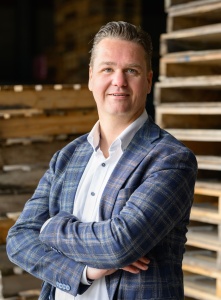 Martin Meurs has worked in the packaging and load carrier industry for more than 20 years. After starting his career in the construction sector, he moved into packaging, attracted by its dynamic nature and the opportunity to work with businesses across a wide range of industries. After spending several years at Roldo Rent and later at 2Return, he now serves as Business Development Manager at Rotom Group, helping to develop and expand Circular Pallet Solutions across Europe.
For Martin, sustainability is more than a business objective. His motivation to keep products and materials in use for as long as possible has guided both his professional and personal life. Today, that passion is reflected in his work, helping businesses make the transition towards more circular supply chains.
Thank you for taking the time to speak with us, Martin. To begin, in October you'll be speaking during our webinar “Pallet Recovery: From Loss to Control”. What motivated you to participate?
The topic of pallet reuse is something I genuinely care about. Throughout my career, I've always been interested in finding ways to keep products and materials in use for longer rather than seeing them become waste too quickly. This webinar gives me the opportunity to share that passion with a wider audience. Circular Pallet Solutions offer opportunities for businesses from both a financial and sustainability perspective, and I believe there is a lot to win. That's why I'm looking forward to starting the conversation and sharing practical insights with the participants.
Why do you think pallet reuse is such an important topic for businesses right now?
Pallet reuse enables companies to organise pallet returns without losing ownership and control of their pallet assets. That is exactly the challenge many businesses are facing today. In the past, pallets often moved out of sight once a product had been delivered. Today, companies are increasingly expected to know what happens to the packaging they put on the market and how it is reused. Regulations such as the PPWR are accelerating that shift, while businesses are also looking for ways to improve sustainability, reduce waste, control costs and gain better visibility across their supply chains. By keeping pallets in circulation for longer, this approach helps address these challenges in a practical and measurable way.
Many companies have used pallets for years without actively managing what happens after delivery. Why is that becoming a challenge?
Companies naturally focus on supplying their products because that is where they create value. The pallet simply supports and protects the product during storage and transport, so once the goods have been delivered, it often stops receiving attention. The challenge is that no one looks at the pallet from the perspective of the entire supply chain. The sender focuses on the purchase cost, while the recipient is often left with handling or disposal costs. As a result, valuable pallets are treated as waste, creating unnecessary costs and inefficiencies for everyone involved. Looking at the total cost throughout the supply chain rather than individual costs is where the real opportunity lies.
Why did Rotom choose a live webinar rather than simply publishing another article or whitepaper?
I've joined many webinars over the years, some better than others. What I like about a good webinar is that it brings the topic alive. Rather than simply reading about a challenge, participants can hear practical examples, ask questions and learn how other companies are dealing with similar situations. That's also why we chose this format. People don't only learn from the speaker, they learn from each other. Sometimes a question from another attendee makes you look at your own organisation differently or highlights an opportunity you hadn't considered before. That interaction is something you don't get from an article or whitepaper.
What makes this webinar different from other logistics or sustainability webinars?
(Laughs) First of all, it will be my first webinar as a speaker, so that already makes it a special one for me. But more seriously, we're not simply presenting a solution. We want to tell the full story. Through practical examples and challenging questions, we'll explore the changing view on pallets within the supply chain, the impact of regulations, and how companies can prepare for what lies ahead.
Who should attend this webinar?
I would encourage professionals working for companies that place large volumes of standard or customised pallets on the market to join the webinar. While logistics, procurement and supply chain managers will recognise the challenge, pallet reuse is not just a logistics topic. Financial managers, sustainability professionals, operational managers, sales managers and senior executives all have a stake in it. That's because Circular Pallet Solutions have an impact on costs, reporting, ownership and business performance across the entire organisation.
If a company is unsure whether this topic is relevant to them, what questions should they ask themselves?
I would start with a few simple questions: Do we know what happens to our pallets after delivery? Who owns the pallet once it reaches the end user? Who is responsible for getting it back? And how do we currently control pallet spend from both a financial and sustainability perspective? If those questions are difficult to answer, there is a good chance the webinar will offer valuable insights for your company.
Without giving too much away, what are some of the key takeaways attendees can expect?
Participants will gain practical insights into how pallet reuse can be organised in practice and what it takes to establish an effective return process across the supply chain. We'll explore what happens to pallets after delivery, who is responsible for them, and how companies can create a structured return process that provides greater control over pallet flows. We'll also explain how regulations such as PPWR, EUDR and CSRD affect transport packaging in practice, and share real-world examples of how pallets can be registered, collected, repaired, returned and reused to reduce costs, improve visibility and support sustainability goals.
What is the one message you hope attendees will remember after the webinar?
I hope attendees remember that packaging reuse can only be realised through cooperation across the supply chain. A pallet is a shared asset, and a reuse system should be shared too. When supply chain partners work together, there is a lot to win: less waste, lower costs, greater control and better visibility throughout the supply chain.
Register for the webinar
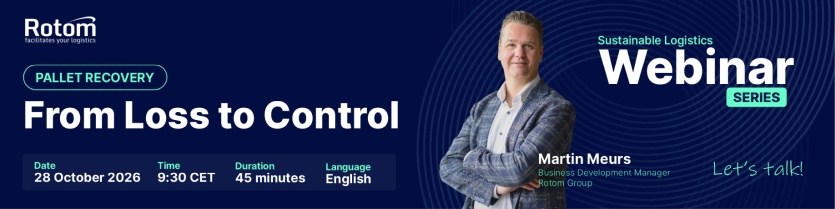
Want to gain greater control over your pallet flows and reduce unnecessary losses? Join our live webinar "Pallet Recovery: From Loss to Control" on 28 October 2026 at 09:30 CET. Participation is free of charge. Held in English via Microsoft Teams, the webinar will last approximately 45 minutes and explore how effective pallet reuse can support your operational, financial and sustainability objectives.
