
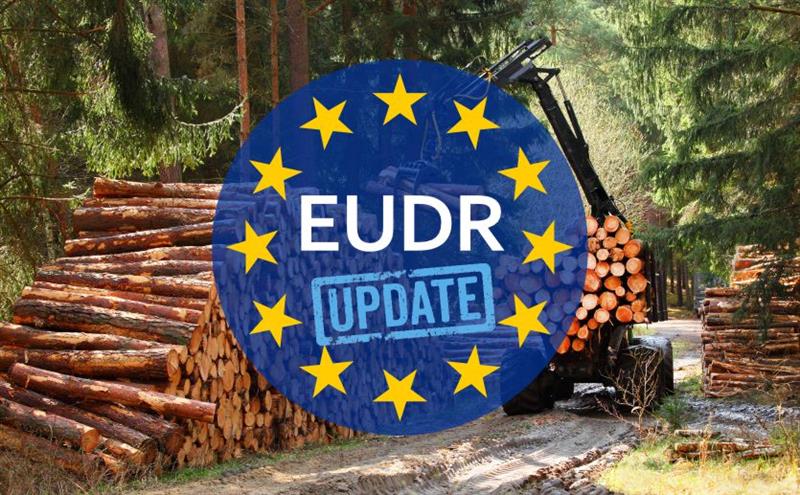
The EUDR is delayed and simplified. New EU decisions push implementation deadlines back by a year and significantly reduce due diligence obligations for downstream operators - clarifying what this means for Rotom and its customers.
The European Union’s Deforestation Regulation (EUDR) has played a key role in shaping expectations around deforestation-free supply chains over the past two years. While the regulation was originally set to apply from January 2026, the European Union has now confirmed both a one-year delay and a simplification of obligations for downstream operators.
On 17 December 2025, the European Parliament formally adopted these changes, and the final text was later published in the Official Journal of the EU confirming the revised timeline and measures aimed at reducing administrative burdens across supply chains.
Revised EUDR implementation deadlines
Under the updated timeline, the EUDR will apply as follows:
- Large and medium-sized enterprises: 30 December 2026
- Small and micro-sized enterprises: 30 June 2027
- Enterprises currently covered by the EU Timber Regulation (EUTR): 30 December 2026
These changes provide companies with additional time to prepare while aligning obligations more closely with operators’ roles within the supply chain.
Simplified obligations for downstream operators
The revised regulation introduces important clarifications for downstream operators:
- Only the first downstream operator is required to collect Due Diligence Statements (DDS) or declarations from primary operators.
- There is no legal obligation for this information to be passed further down the supply chain.
This significantly reduces compliance complexity for companies operating further downstream.
What does this mean for Rotom and its customers?
As a result of these simplifications, Rotom and its customers fall outside the scope of the EUDR’s strict due diligence obligations.
Within the supply chain, Rotom operates as a second downstream operator, as it does not purchase timber directly from forest owners. Under the EUDR definitions, this means Rotom is not legally required to collect or pass on upstream DDS or declarations. Consequently, the same exemption applies to Rotom’s customers.
Rotom’s ongoing commitment to responsible sourcing
Although the EUDR no longer imposes due diligence obligations on Rotom, we continue to recognise our customers’ expectations for transparency, sustainability, and responsible sourcing. These principles remain central to how we operate.
Rotom maintains high standards in timber sourcing and pallet production to ensure our products remain a sustainable, best-in-class choice. Our commitment includes:
- Responsible sourcing: Timber is sourced exclusively from known origins and low-risk countries, as benchmarked by the EU.
- PEFC Chain of Custody certification: Several Rotom locations are already PEFC certified, with full certification across all locations targeted by 2026. This certification ensures wood and wood-based products originate from sustainably managed forests and controlled sources.
- Supplier due diligence: Rotom works only with suppliers that have undergone rigorous due diligence regarding the origin of wood, aligned with EUDR-equivalent standards.
- Circular pallet solutions: Rotom offers used and repaired wooden pallets, as well as pallet rental services. These circular options are excluded from the EUDR scope and further reduce environmental impact.
Summary about the EUDR update
Under the revised EUDR framework, neither Rotom nor its customers are required to collect or pass on upstream due diligence information. Despite this exemption, Rotom remains firmly committed to responsible timber sourcing, PEFC Chain of Custody standards, and circular pallet solutions - ensuring reliability, compliance readiness, and environmental responsibility throughout the supply chain.